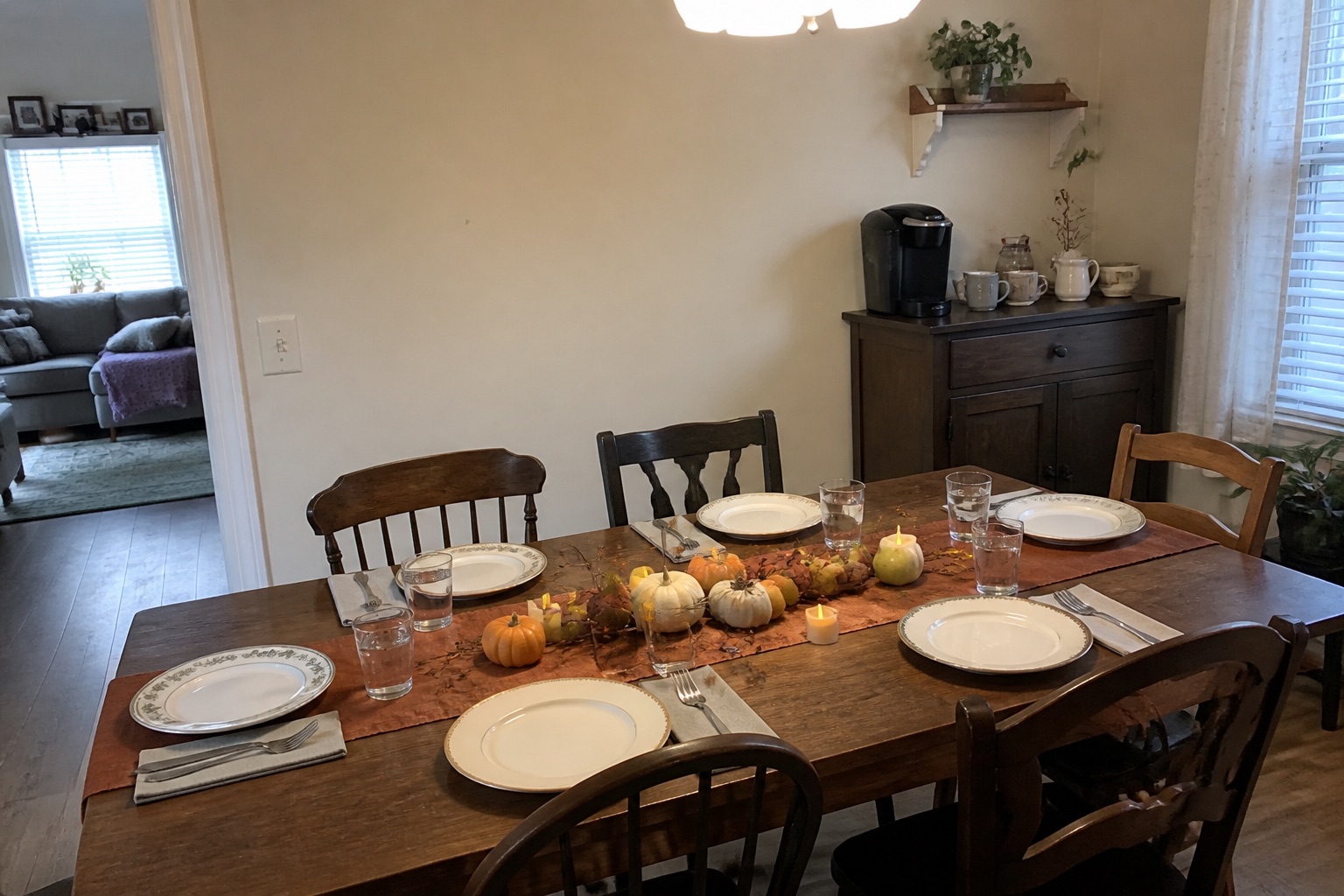
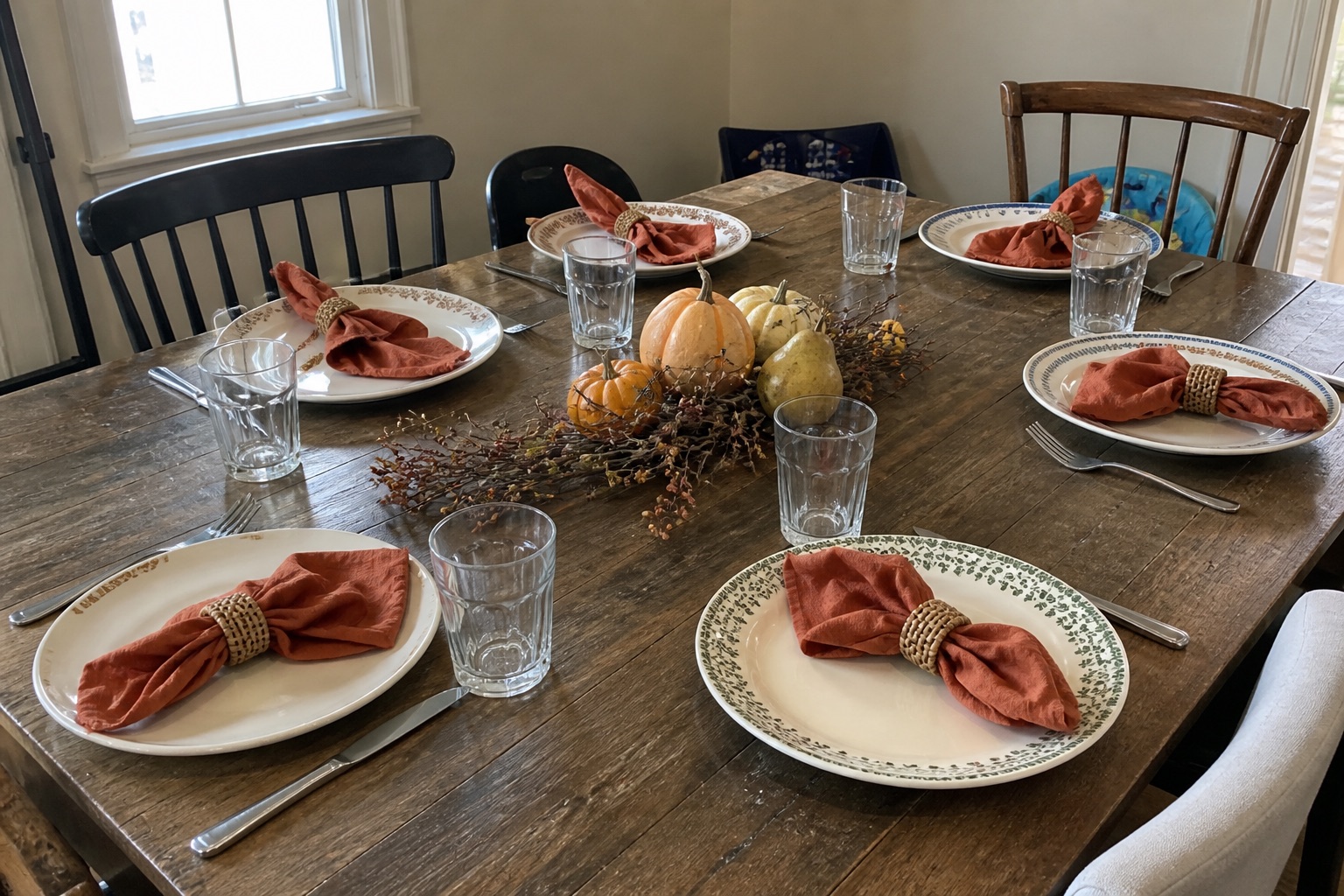
Thanksgiving asks more of a house than a pretty table. People arrive carrying coats, pie plates and overnight bags. The kitchen fills at the exact moment everyone wants a drink. Serving bowls take the space that the centerpiece occupied in the photograph. A useful decorating plan expects all of this. Start with the route through the house, protect the kitchen work area and decide where food will cool after dinner. Then add autumn color through linen, fruit, wood and glass. The home will still feel special, and the plan will lighten the host's workload.
Draw the guest route before you decorate a room
Walk from the front door to the coat area, drinks, bathroom and dining table while carrying a casserole dish. This short rehearsal exposes the chair that blocks a turn, the console covered in objects and the rug edge that catches a shoe. Fix those problems first. Next, choose three hosting zones: an arrival point, a self-serve drink point and a place for used dishes. They can be small, but each needs a clear surface and a single purpose. Decorate around the boundary and leave the working center open. A branch arrangement can sit behind the mugs. A rust throw can mark the entry bench. The empty surface tells guests what to do more clearly than a printed sign.
Give coats, bags and food carriers an obvious landing place
Empty more hooks than you think you need and clear one bench, chair or luggage rack for bags. Put a tray or folded towel on a nearby surface for hot or damp food carriers. Keep shoes and floor baskets to one side so several people can enter without stepping around a display. Once the route works, add a wreath, one branch in a sturdy vase and a washable rust-colored throw. Avoid fragile pieces on the console edge where a pie box may land. If children are coming, move matches, breakable ornaments and anything with small loose parts out of reach. The entry looks ready because it has room for the people you invited.
Rehearse the table with the serving dishes in place
Set the empty platters, casserole dishes, gravy boat and bread basket where they will sit during the meal. Only then should you build the centerpiece. A shallow bowl of pears, pomegranates or small gourds gives the center weight without blocking faces. Short battery candles and a narrow runner can fill the gaps. Sit in two different chairs and check the view across the table. Move anything that hides a guest or requires passing a hot dish over a flame. Place trivets before they are needed and leave a clear route for the turkey platter. The finished table may look quieter before dinner, but it will look generous when the food arrives, which is the view that matters.
 ⬤ Save
Move cider, coffee and cold drinks out of the kitchen traffic
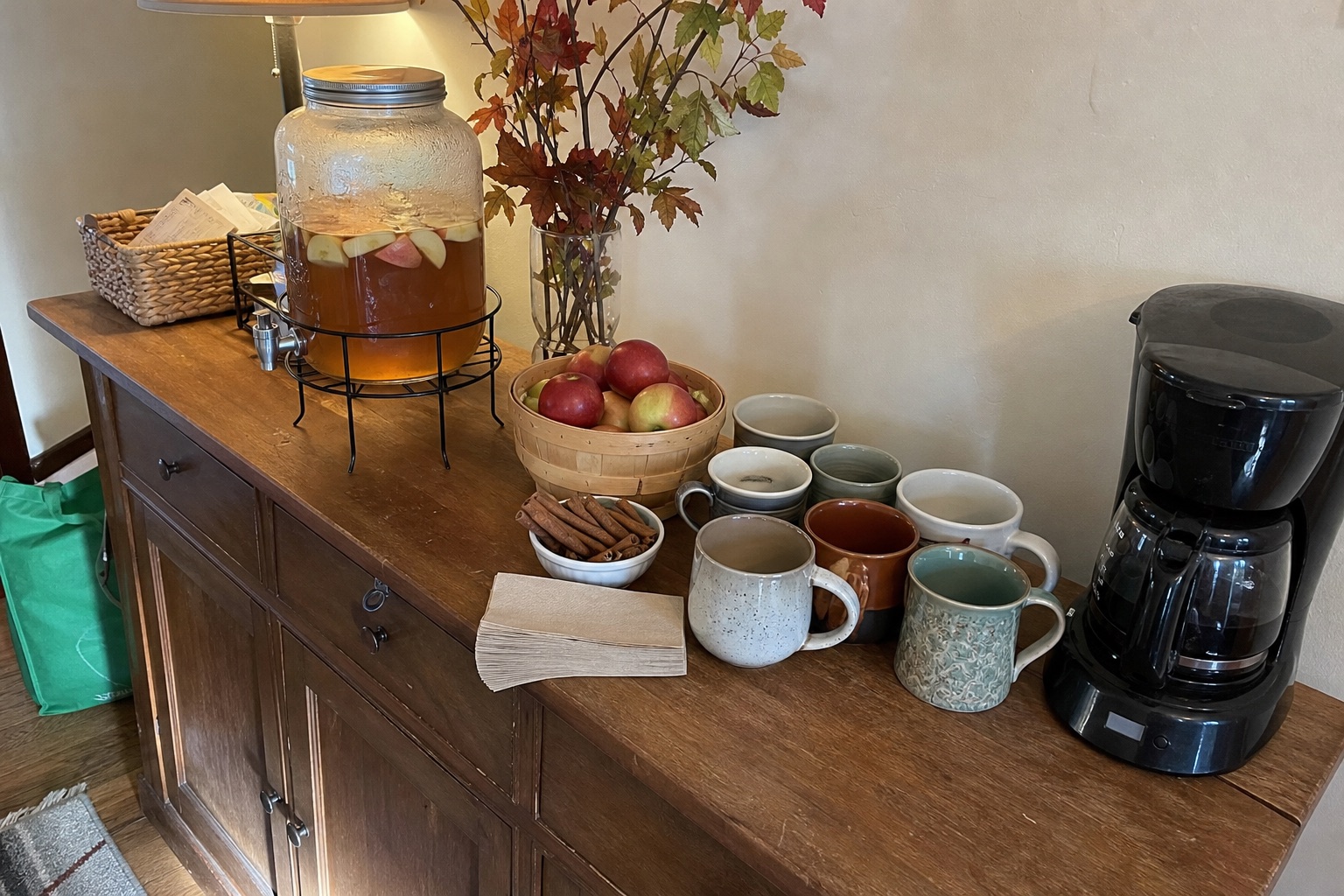
Set up drinks on a console, bar cart or dining-room sideboard that guests can reach without crossing the cooking path. Group mugs, glasses, spoons, napkins and sweeteners on one tray. Put the cider dispenser or coffee carafe beside it and leave enough room to set down a cup while pouring. A short branch, bowl of apples or bundle of cinnamon adds autumn color without stealing the work surface. Keep electrical cords behind the table and away from the pour area. Store backup mugs and drink supplies below. When a guest asks whether they can help, send them to refill this station. That keeps one more person out of the kitchen.
Protect one kitchen counter and one safe cooking path
Choose a counter run for chopping, plating and hot dishes. Remove the vase, mail, toaster and decorative pumpkins from that surface. Stand cutting boards nearby, group working utensils in one container and place the serving bowls within reach. Keep bags, toys and extra stools off the floor. NFPA advises staying in the kitchen while food cooks on the stovetop, staying home while the turkey cooks and checking it often. That is easier when the cook can move without squeezing past guests. Give children a project at the dining table or in another room, and route drink refills away from the stove. Decor belongs on a shelf or window ledge here, never between the cook and the pan.
 ⬤ Save
Serve buffet food in smaller batches and watch the clock
A full platter looks abundant, but a smaller one is easier to keep at a safe temperature and easier to replace cleanly. USDA guidance says cold perishable food should stay at 40°F or below and hot food above 140°F. Perishable dishes should not sit at room temperature for more than two hours. Put half of a cold appetizer out and keep the rest refrigerated. Use warming equipment for hot dishes if the meal will stretch. Set a phone alarm when the first dishes reach the table so the host does not have to remember the deadline during conversation. Keep a clean serving utensil with every dish. Replace a used platter with a clean one before adding fresh food.
Prepare the sitting room and guest bed for the long part of the day
Thanksgiving rarely ends when the plates are cleared. Pull lightweight chairs into the sitting area before dinner and give each seat a reachable place for a cup. Gather throws in one open basket so every chair stays free. Turn on a floor lamp and a small side lamp before guests move rooms, then use battery candles where sleeves, children or pets may pass. For overnight guests, clear one luggage surface and a short run of hanging space. Add water, a phone charger and a warm reading light beside the bed. One rust throw or clipped branch carries the autumn mood. The rest of the room should be open enough for a tired person to use without rearranging it.
Make the leftover station before anyone sits down
Empty the dishwasher, clear one sink basin and match storage containers with their lids before dinner. Put masking tape and a marker beside them if several households will take food home. USDA recommends refrigerating perishable food within two hours and dividing large amounts into small, shallow containers so they cool faster. Carve the remaining turkey into smaller portions and pack those portions in shallow containers. Thanksgiving leftovers can stay in the refrigerator for up to four days; reheat them to 165°F. These steps are easier when the containers are ready and the counter is clear. The table can linger for conversation while one organized station handles the food that needs attention.