Scandinavian design was never built for a dining room reserved for guests. It was built for the table a family actually eats at, on an ordinary Tuesday, in a climate with more dark months than bright ones. Here's how to bring that same calm to yours.
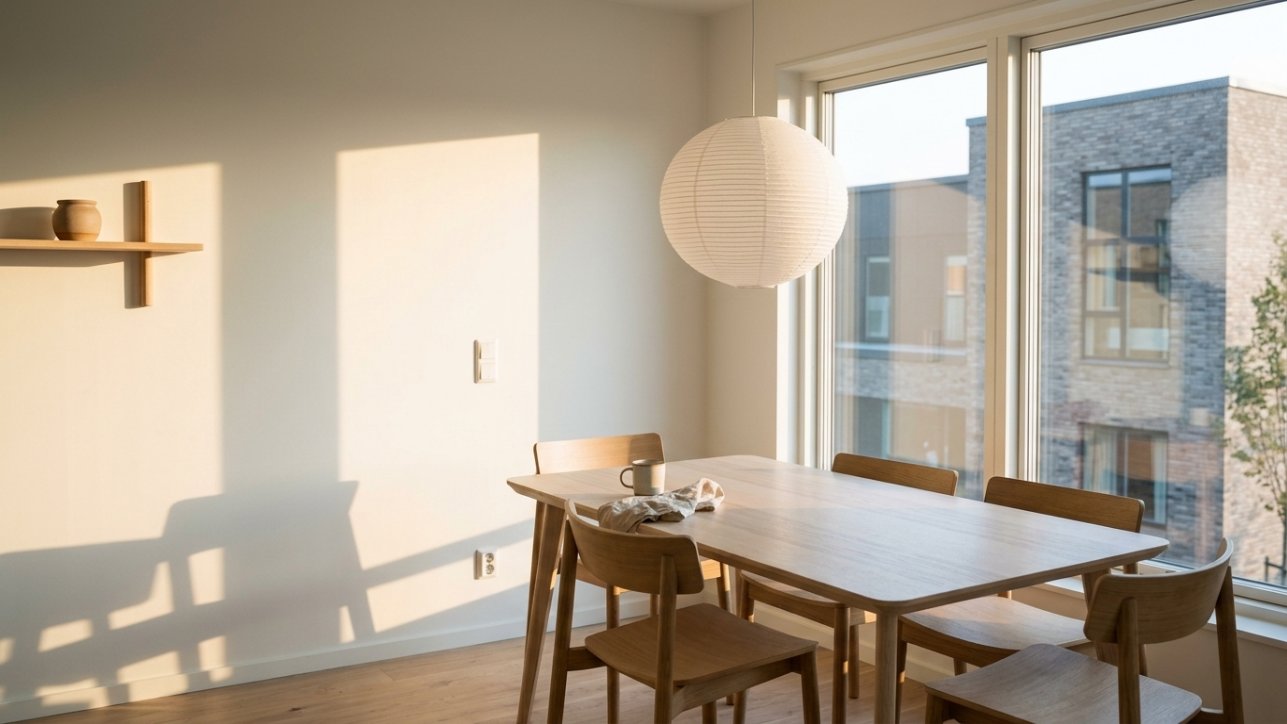
Choose pale, honest wood for the table
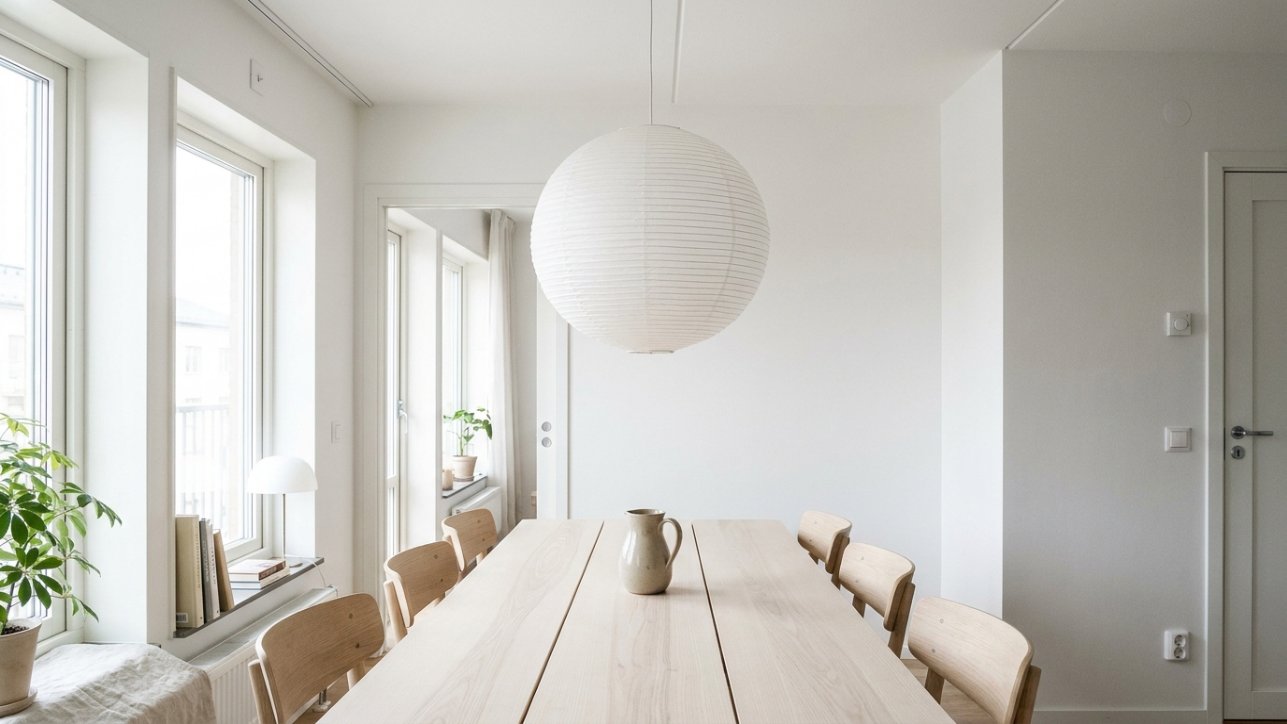
Light ash, birch or whitewashed oak reads Scandinavian faster than any other single choice. Skip a table with a heavy, dark stain or elaborate turned legs; the whole point is a simple, straight-lined table that looks like it was made by someone who cared about the grain more than the ornament.
Keep the chairs matched, or curated on purpose, never in between
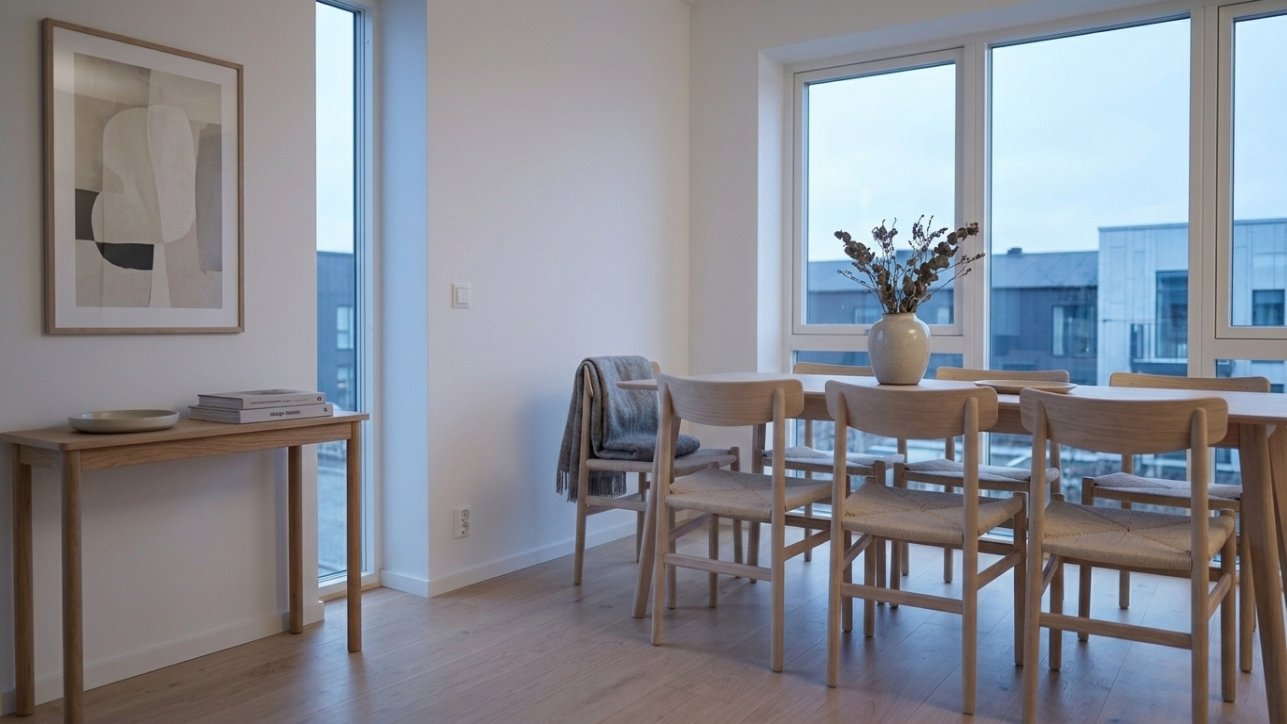
Scandinavian dining rooms tend to go one of two ways: six identical light-wood chairs, or a deliberately mixed set where every chair is a different classic silhouette in the same pale wood tone. What doesn't work is six almost-matching chairs bought at different times without a plan. Pick one approach and commit.
 ⬤ Save
Hang one honest pendant, low over the table
A single paper, glass or matte-metal pendant hung about 30 inches above the tabletop does the lighting work of the whole room. Scandinavian style avoids chandeliers and multi-arm fixtures; one clean shape, one warm bulb, centered over the table, is the rule.
Let the walls stay quiet
White or the softest possible off-white walls are what make the wood and the one pendant stand out. If the walls need something, one piece of graphic black-and-white art or a single botanical print is enough. This is a room built around negative space, not a gallery wall.
Add exactly one textile layer
A linen table runner, or a set of woven placemats, is the one soft texture this room needs. Skip the tablecloth, the patterned rug under the table and the curtains all at once; pick the single textile that will get used every day and let the rest of the room stay clean-lined.
 ⬤ Save
Bring in green through one plant, not a collection
A single tall plant in the corner, a fiddle-leaf fig or an olive tree, says more than a windowsill crowded with small pots. The style trusts one confident gesture over many small ones, in furniture and in greenery alike.
What pale wood and white ask of you
The whole look leans on daylight, so in a north-facing or windowless room it looks flat and cold rather than bright, and no lamp fully stands in for the sun it's built around. Pale ash and white also show red-wine rings and marker within a season on a table used every night, so seal the wood and choose washable seat covers if you have young kids. It works best in a bright room, for someone who wipes the table down after dinner, not in the morning.