Rustic gets confused with farmhouse constantly, and the difference matters: farmhouse is painted wood and gingham, rustic is wood left rough, stone left raw, and a kitchen that looks like it was built by hand a hundred years ago. Here's the version that's actually rustic, not just beige.
Leave the wood unfinished or lightly oiled
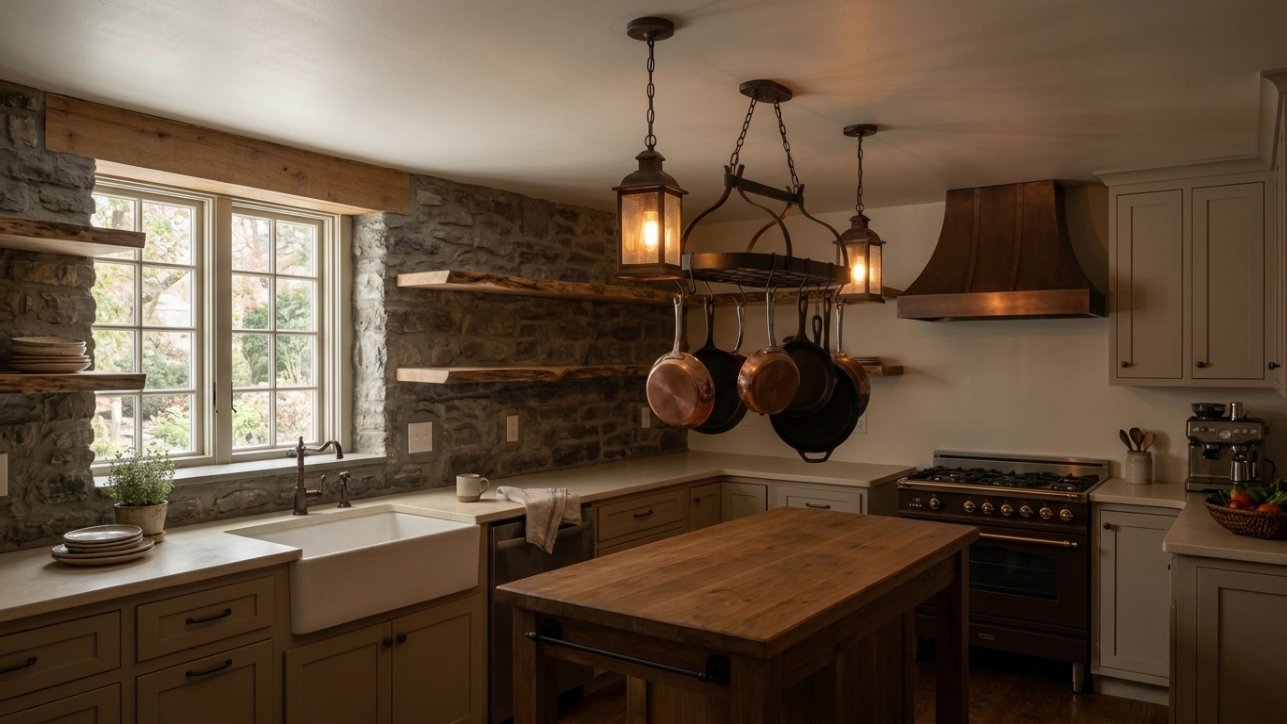
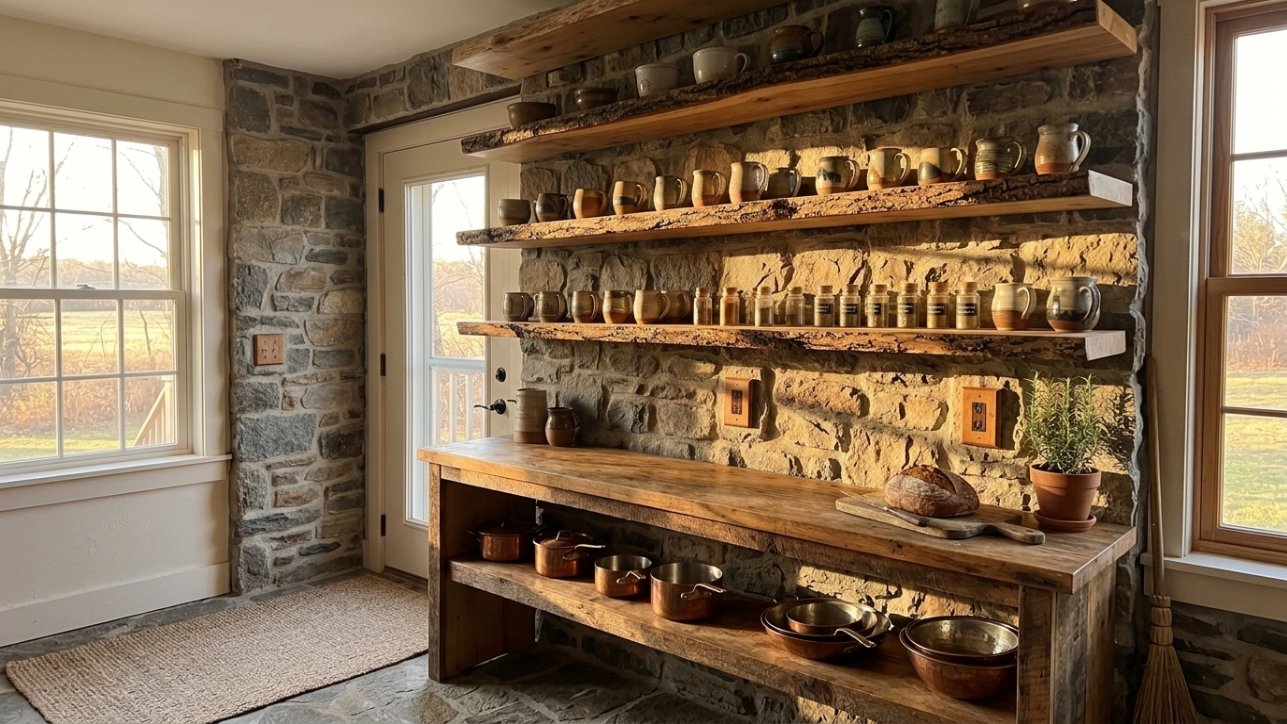
Open shelving in rough-sawn or live-edge wood, left unpainted and barely sealed, is the fastest way into this look. Anything painted or glossy pulls the room toward farmhouse instead.
Add one stone or brick surface
A stone backsplash or an exposed brick accent wall grounds the whole room in something that looks like it's always been there, which is exactly the feeling rustic is chasing.
 ⬤ Save
Choose iron and wrought details over brass or chrome
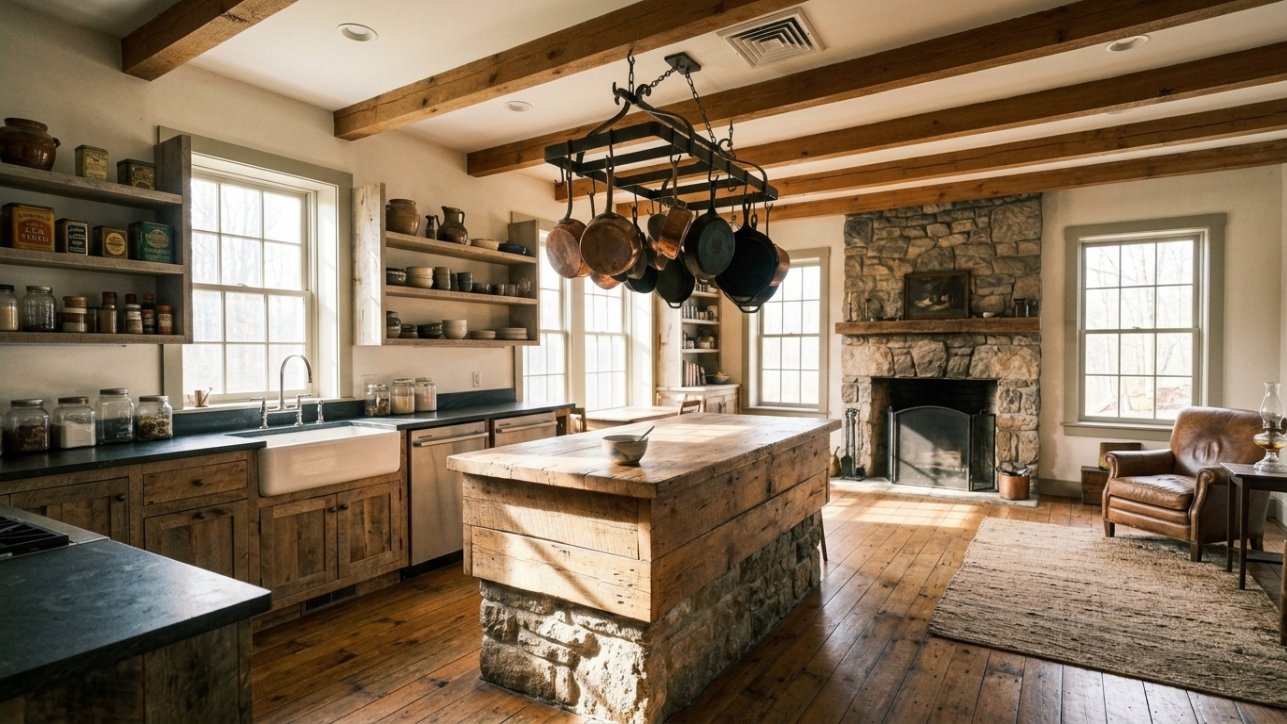
Hardware, pot racks and light fixtures in iron or wrought metal read as forged by hand. Brass reads as decorated; chrome reads as modern. Neither belongs here.
Hang pots and pans instead of hiding them
A hanging iron rack over an island puts the cookware on display as decor, the oldest kitchen trick there is, and it saves cabinet space in the process.
Use heavy woven textiles
A thick jute runner and a chunky woven basket for onions and root vegetables carry the texture this style needs. Skip anything delicate or lightweight; rustic textiles should feel substantial in the hand.
 ⬤ Save
A lantern or wrought-iron fixture, not a chandelier
A wrought-iron chandelier or a lantern-style pendant, fitted with warm bulbs only, finishes the room. Anything sleek or glass-heavy belongs to a different style entirely.
Raw wood and stone, the practical downside
Live-edge and unfinished wood look right but stain and harbor bacteria in a working kitchen, so any surface near food needs regular oiling or a food-safe seal to stay hygienic. Open shelving means every plate and jar catches cooking grease and dust and wants wiping far more often than a closed cabinet, which is a real chore for a heavy daily cook. This suits a larger kitchen and someone who cooks moderately; in a tiny galley used hard, keep the raw wood well away from the stove.