Maximalism looks like chaos until you notice the discipline underneath it: a fixed color story, repeated across dozens of patterns, is what separates a curated room from a cluttered one. Here's how to fill a room to the edges and still have it read as intentional.
Pick a color story before you pick any pattern
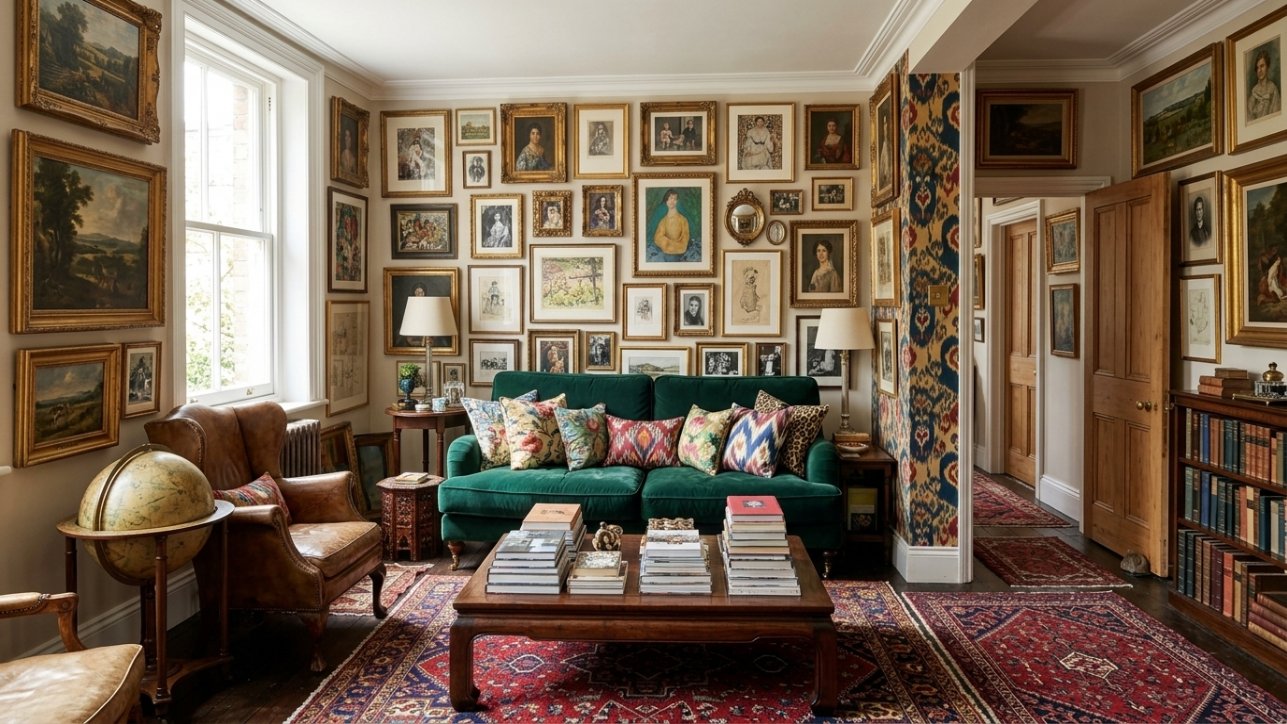
Three or four colors that repeat across the whole room keep dozens of patterns from turning into visual noise. Maximalism is disciplined chaos, not random chaos, and the discipline starts here.
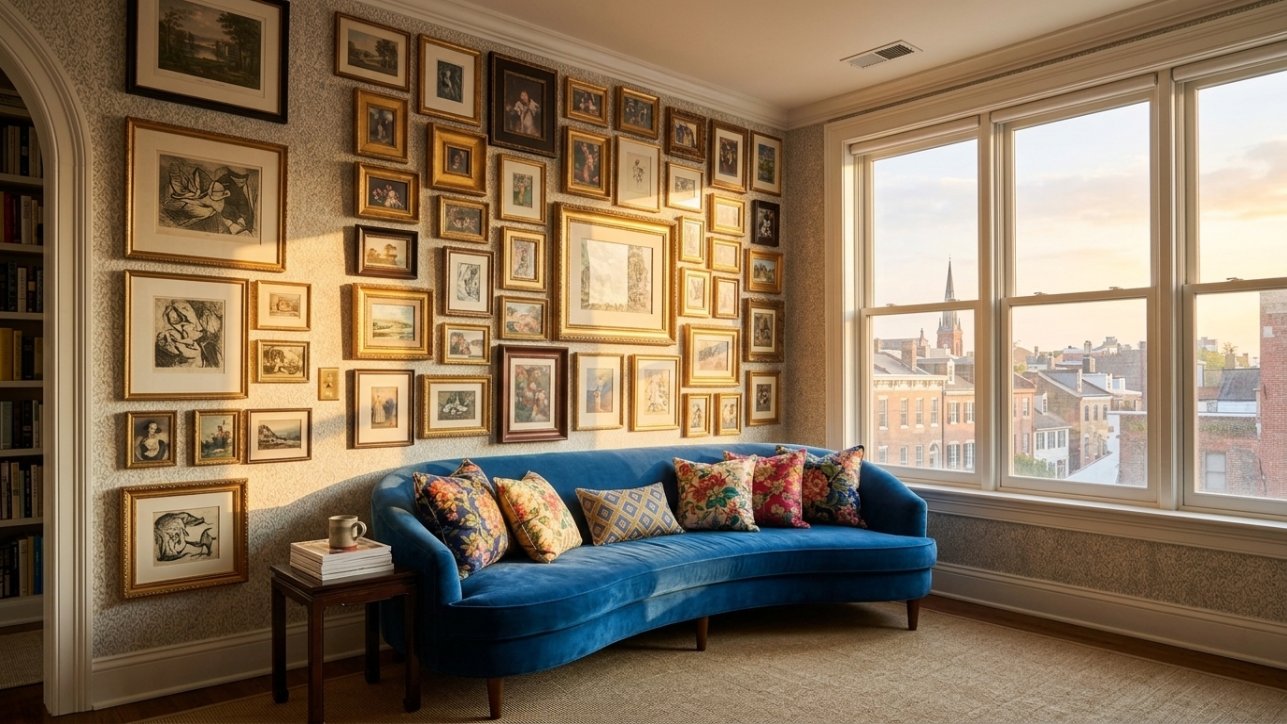
Cover the wall floor to ceiling, frame to frame
A dense gallery wall with no visible gaps is the single fastest maximalist signature there is. Leaving breathing room between frames reads as eclectic instead of maximalist.
 ⬤ Save
Mix at least three patterns in the same room
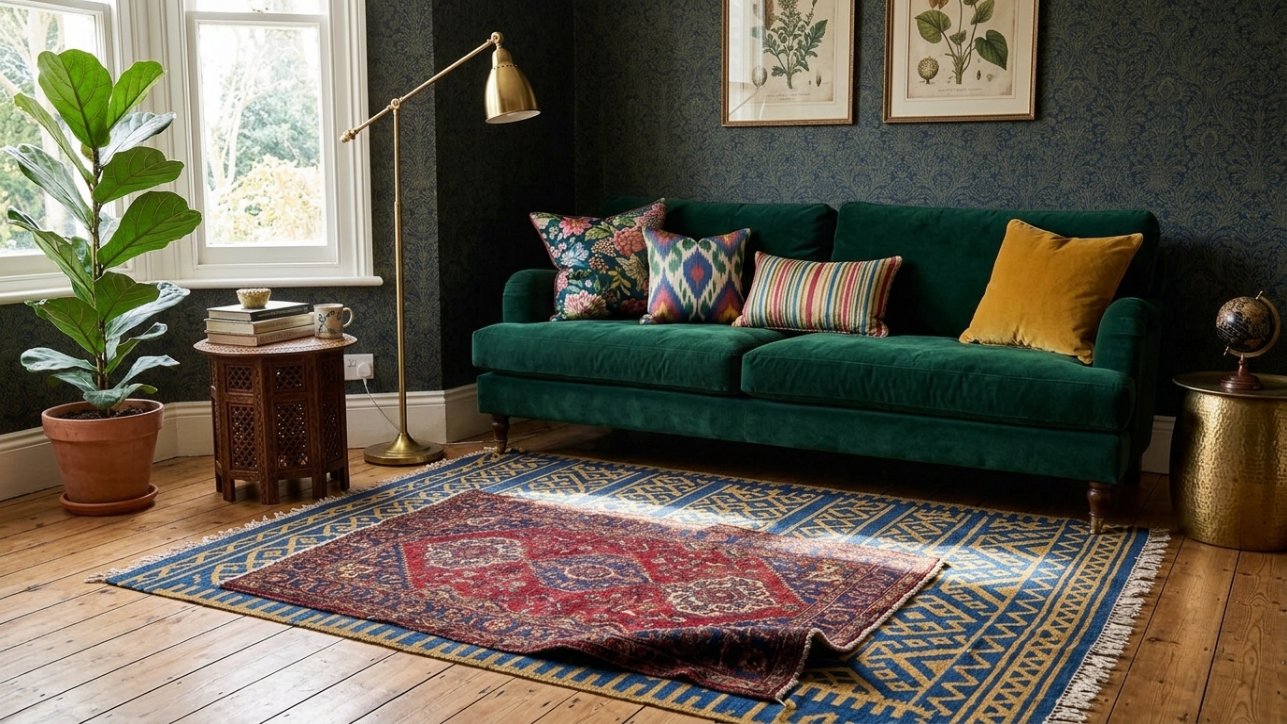
Florals, stripes and a geometric together, all sharing the chosen color story, is the formula. One pattern alone, no matter how bold, is just a themed room.
Layer rugs instead of choosing one
Two overlapping rugs, or one bold rug over wall-to-wall carpet, adds a depth that most single-rug rooms never reach.
Choose furniture with a strong silhouette or a bold color, never both neutral
A curved velvet sofa in a saturated color, or a boldly patterned chair, becomes an anchor rather than a background piece. Neutral furniture in this room reads as unfinished.
 ⬤ Save
Add plants in odd, generous numbers
Five or seven, not two. Maximalist greenery commits the same way the patterns do; a couple of lonely plants undersells the whole effect.
The most demanding style to keep, and to change
A full maximalist room is the heaviest to dust of anything here: every object and frame on that gallery wall collects it. It is also the hardest to undo later, since a committed color story and wallpaper are not a weekend change, and it costs more, because the look comes from many pieces rather than a few. For a mind that finds visual busyness stressful, it is the opposite of restful. It suits someone energized by richness, with the budget for it, who isn't renting.