Eclectic design is the one style that can't be bought as a set, which is exactly why it's hard to fake and satisfying to get right. It builds around what you already own and love, not a shopping list. Here's how to make a home office that looks collected, not coordinated.
Start with one piece you already love, not a shopping list
Eclectic design builds around an existing object, a family desk, a flea-market chair, a piece of art, rather than starting from a blank plan. Let that piece set the direction for everything else.
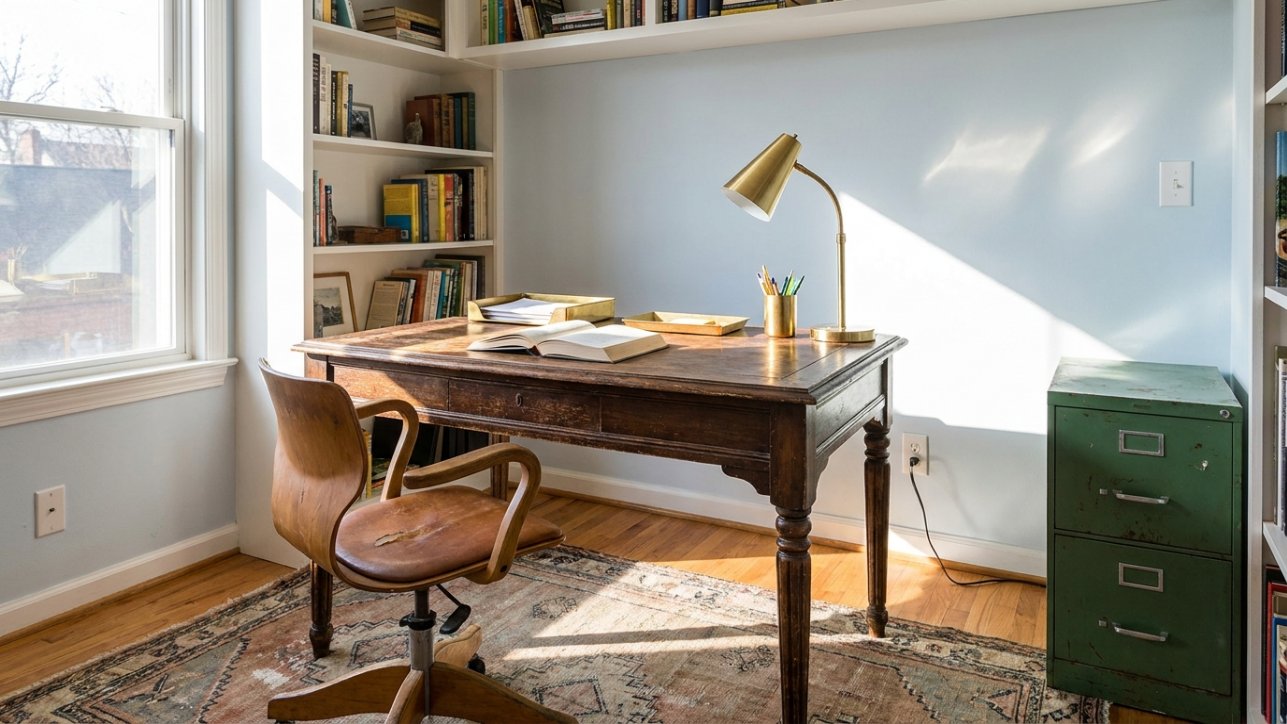
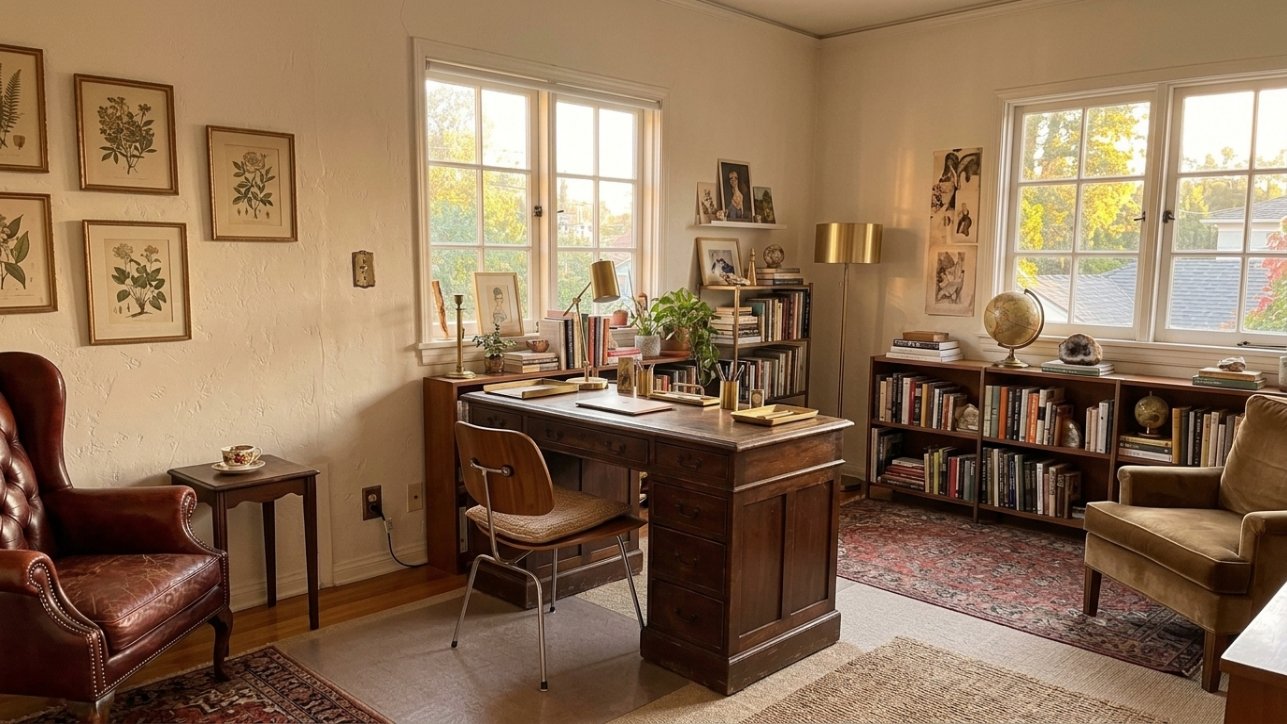
Mix at least two furniture eras on purpose
A mid-century chair with an industrial shelf, or a modern desk with an antique lamp, is the combination that makes a room read as collected over time instead of bought in one trip.
 ⬤ Save
Let one color or material thread tie it together
Even wildly different pieces read as intentional when they share one repeated color or material, like brass hardware or a recurring shade of green, running through the room.
Display the odd and the personal
A strange flea-market find, a childhood object, a piece of art nobody else would choose: this is what makes an eclectic room impossible for anyone else to copy exactly.
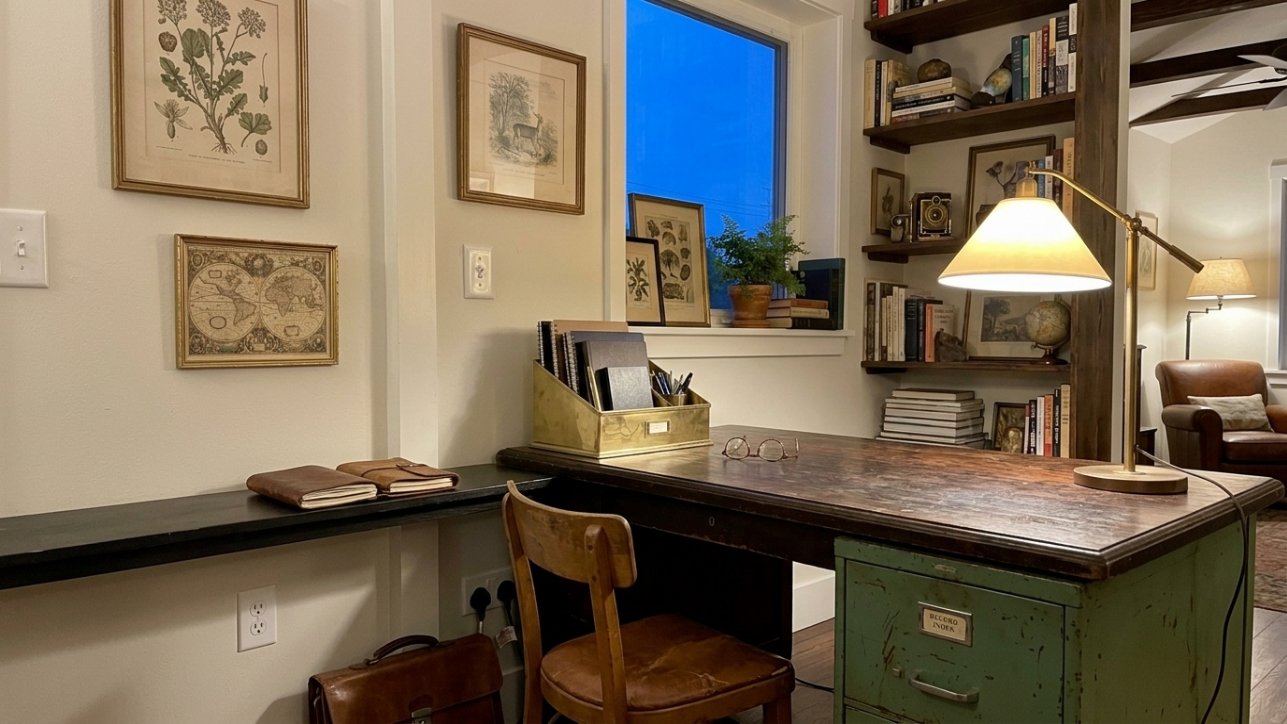
Don't match the storage
An open shelf, a vintage filing cabinet and a woven basket can all sit in the same room without matching, as long as each one earns its place instead of just filling space.
 ⬤ Save
Edit ruthlessly even though the style looks loose
Eclectic isn't the same as cluttered. Every object in the room should be something you'd defend keeping, not just something that happened to end up there.
The hardest look to actually pull off
Eclectic is the easiest style to get wrong, because the line between collected and cluttered is thin, and without a disciplined color or material thread running through it, the room just looks like a mess. It also can't be bought in one trip: the good version accumulates over time, so it is slow, and the lack of a rulebook means more decisions, not fewer. It's for someone with a strong personal eye and the patience to edit ruthlessly as they go.